
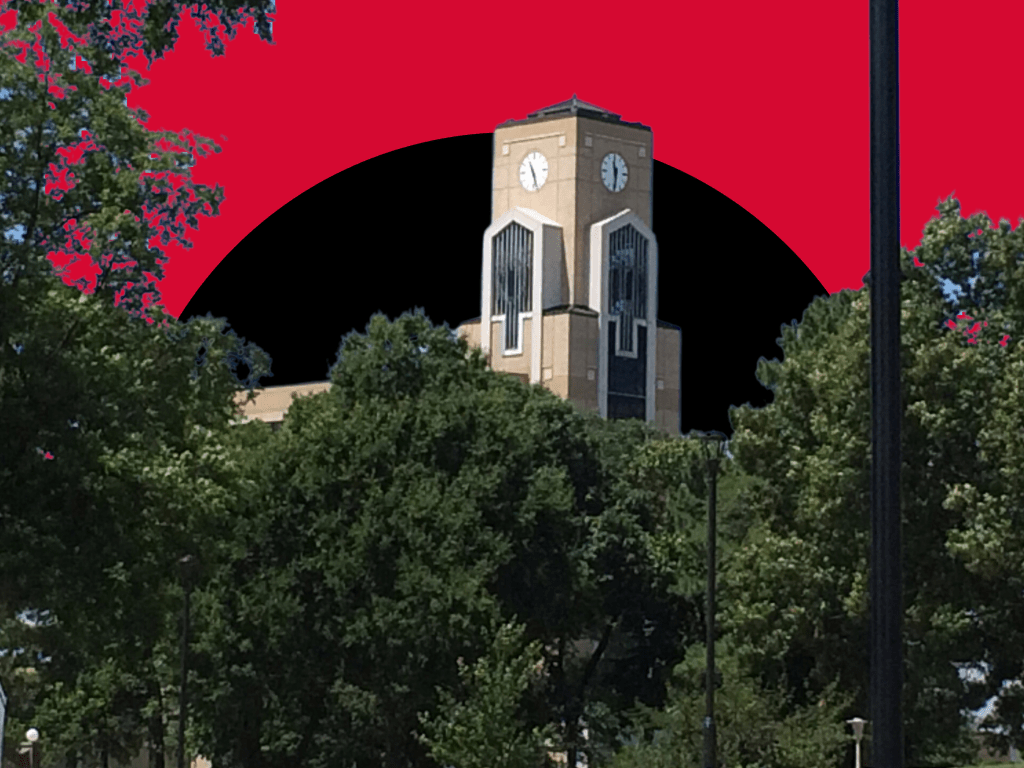
Why My Gripe With How Arkansas State Athletics Is Covered Is So Much Bigger Than Football
If you live in Northeast Arkansas, I invite you to visit (or just drive by) Big River Steel, a company owned by US Steel and is said to be the “greenest steel mill in the nation,” owed to its carbon-free electric arc smelting technology. It is, in fact, the only steel production facility in the United States to be LEED certified. To see reclaimed steel melted by this process is like witnessing a World’s Fair display from Nikola Tesla – sparks fly with Independence Day energy as the atmospheric temperature rises to near lethal degrees. It’s truly a wonder.
Big River Steel, accessible to the mighty Mississippi River, rises from the Delta farmland the way the Pyramids did in ancient Egypt. Erected in 2014, BRS was the largest industrial project in the history of the state of Arkansas with over $1.3 billion invested. In 2022, BRS broke ground on non-grain oriented (“NGO”) electrical steel line at its Big River Steel facility in Osceola. The new line is the length of nearly eight football fields at approximately 2,333 feet long, and with a 200,000-ton annual capacity. Those numbers sound big, but to stand before the construction is truly awe-inspiring. Who knew that man had capacity to build such things?
I wax poetically on Big River Steel because steel is a specialized technology that northeast Arkansas can own. All the elements are in place: affordable electricity, abundant land, river access, an available workforce – and close proximity to a major university, Arkansas State. The prospect of partnership between steel (LEED certified steel!) and northeast Arkansas should be cause for excitement among Arkansans.
However, if you live in Central Arkansas, you likely know more about the concert lineup at the Walmart AMP in Rogers than the promise of steel in NEA.
Contrary to Public Opinion, Northeast Arkansas Has Merit
Earlier this week, I got into a social media row with the Arkansas Democrat Gazette and its coverage of Arkansas State’s victory over Louisiana, a triumph that brings the hard-luck football team within one win of bowl eligibility. On the same day, the state’s other FBS football program, the University of Arkansas Razorbacks, earned its first conference win of the season to improve their record to 3-6. This achievement merited multi-spreads from the statewide Sunday newspaper. The Red Wolves victory was consigned to a quarter-page section on page 11, no accompanying photograph. I thought this was unfair.
The response to my gripe was surprising, even though I had bore the slings and arrows of internet trolls for a long time. Immediately, a host of warriors rose to defend the Democrat Gazette‘s coverage of Arkansas State, citing the immense popularity of the Razorbacks (an irony lost of those who made this argument, none seeming to understand that the Razorbacks’ popularity could be fueled by the state’s fawning media). I never advocated that the Red Wolves replace the Razorbacks on Page One or even the immediate pages following. What I wanted was acknowledgment of an achievement made by an institution that is vital to Northeast Arkansas’ growth.
“A newspaper’s purpose is to sell papers,” was a common defense, which probably alarmed a number of diehard journalists. The consensus opinion seemed to imply that Arkansas State didn’t merit coverage – a dismissal clearly shared by the newspaper itself. And if the University’s success on the football field is not worthy of the newspaper’s mention, why would anything that comes out of Northeast Arkansas be worthy of mention?
“A Rich State With a Lot of Poor People”
A wise colleague of mine once observed that Arkansas is a wealthy state that happens to be populated by a lot of poor people. I haven’t the energy to dig into the reasons for this. But the state’s wealth provides a foundation for enormous potential. We simply have to shed some of our self-imposed silos to foster the growth.
The success of Northwest Arkansas is fueled in large part by a happy set of circumstances that led it to becoming home to the world’s largest retailer. But it’s more than that. The University of Arkansas also became a kind of beacon – one that attracted enormous talent that no place in Arkansas could duplicate. The region began to embrace diversity and curate culture, which led to enormous research funding and successful start-up companies and the economic halo effect that comes with industry building. In a matter of just a handful of decades, gravity shifted from central Arkansas to northwest Arkansas, and there’s not much looking back.
Meanwhile, in northeast Arkansas, the city of Jonesboro is often cited as one of the fastest growing communities in Arkansas. In fact, Jonesboro is the cultural, retail, medical and academic center of Northeast Arkansas – a distinction that I believe the city has no problem embracing economically, but sometimes has trouble accepting personally. After all, such responsibility brings with it unsettling things like traffic, noise, crime and possibly a diversity of thought that isn’t taught in Wednesday’s Bible meeting.
Nevertheless, Jonesboro is growing (in all ways). Is this a threat to northeast Arkansas? Absolutely not. In fact, Jonesboro’s growth is an opportunity for all of Arkansas.
It’s the Wonder Twins, Not the Wonder Singlet
Northeast Arkansas is weighed down by a dispiriting lack of economic opportunity for its residents. Its best and brightest have little reason to stay. Those who do stay find a limited menu of career options. Arkansas has fallen behind on providing broadband to rural areas, and that hasn’t helped the Delta’s economy. As a result, we see more poverty, more crime, fewer taxes collected and less development.
But what if we were to devote just a tiny amount of energy (or, say, a better article placement) to the region’s small but meaningful victories? What if we were to show that if the state thought northeast Arkansas had potential, perhaps northeast Arkansans would begin to believe northeast Arkansas had potential?
A second argument made in the defense of Arkansas Democrat Gazette‘s coverage of Red Wolves football was that because the in-person attendance was disappointing, the program and the people who care about it are unworthy of coverage. I would submit that the central Arkansas media community (not just the ADG) plays a significant role in the disappointing attendance. If you read the ADG in the days leading up to the game, or watched the major news outlets, you’d likely have no idea that Arkansas State even fields a football team (or any sports team for that matter). The media is so focused on covering an out of state game with Florida, it had no time for mentioning an in-state game in Jonesboro. Why?
As it was often mentioned in the response I received from my coverage complaint, Arkansas State is no threat at all to the University of Arkansas. One person said that the Arkansas State football program had “literally nine fans.” (Another charitably elevated that number to 127.) It seems like a program with so few fans yet, against all odds, managed to accrue nearly enough wins to play in a bowl game would be considered a bit of an achievement. So why won’t the state’s media so hesitant to shine a spotlight on something good happening in northeast Arkansas?
Would not a northeast Arkansas supported by the rest of the state begin to believe in itself, and in turn become a more lucrative contributor to our society? Not only would the state generate more revenue, you’d have a population more willing to plunk down a monthly subscription to newspapers. Another region in Arkansas could be prospering – and possibly providing an equal exchange of talent and resources so that everyone benefits.
Imagine an Arkansas where the Northwest and the Northeast brought to bear distinctly different yet equally powerful economic tools to supercharge the state. Wouldn’t it be wild if that process were triggered by, I don’t know, putting Arkansas State’s football victories on page 3 of the statewide paper?
Photo Credit: mine
 Howlraiser