

Two enduring images encapsulate the Arkansas State Red Wolves 2023 football season – both centered on head coach Butch Jones. The first was captured by ESPN cameras on Week One during a blowout loss to Oklahoma. After enduring a fourth quarter penalty that cost the Red Wolves more needless yards, a spiritually exhausted Jones is seen hunched on the sidelines, a closed fist to his mouth, eyes closed as he attempts to marshal his composure. It was a hard day – a 73-0 loss to the Sooners wasn’t the opening he, his team or fans had hoped for. Some chose to castigate Jones for projecting an image of vulnerability, but those people missed the point. Jones is known for his off-the-rack coach speak and guarded demeanor. What we saw on the sideline in Norman was a man who deeply cared for his team; a man who desperately wanted to see the seeds of his labor finally bear fruit.
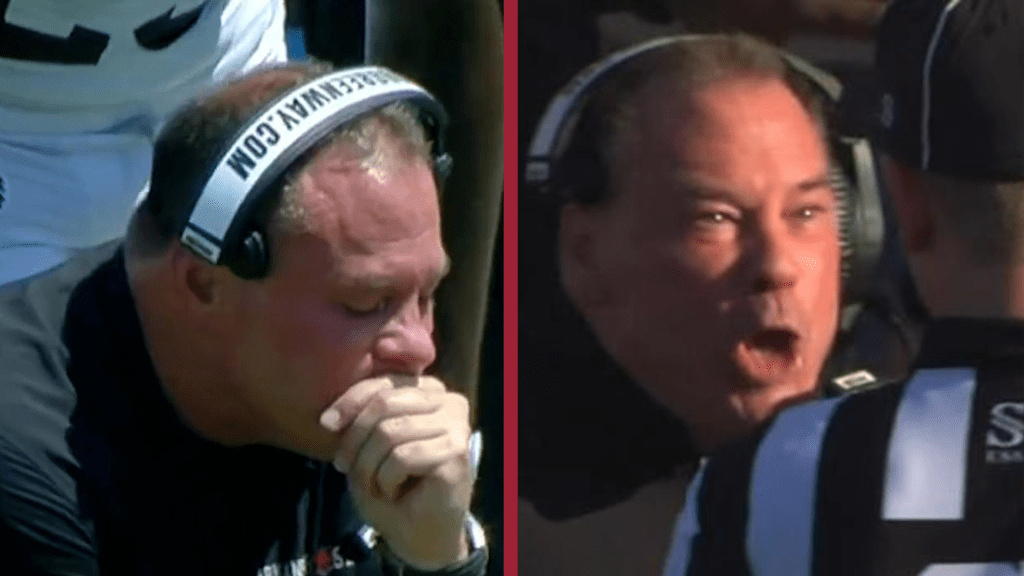
Twelve games later, we bore witness to the season’s second iconic image – again featuring Butch Jones in a moment of emotion. This time, it’s the scarlet-faced head coach screaming furiously at Camellia Bowl officials who disastrously blew a call that negated a potentially game-changing onside kick recovery. When play resumed, Jones wasn’t finished airing his grievances. He called a time-out to continue the ass-chewing as the officials stoically absorbed Jones’ volcanic energy. Jones, a man who governs his press conferences with a select menu of catchphrases, likely dug deeper into his bag of vernaculars in that heated moment.
The Red Wolves season was bookend-ed by frustration – a blowout and a blown call. But it was also one of the more remarkable seasons in recent Arkansas State history. We witnessed the rising of stars, the maturation of a team, and the sudden synergy of a process that began the day Butch Jones crossed into Jonesboro.
The Crockpot Approach to Roster Building Begins to Pay Dividends
The Sun Belt has become a culture dish for Get-Good-Quick roster building through the transfer portal. One only has to note the success of GJ Kinne and the Texas State Bobcats to see how snagging experienced players from the Portal can radically reverse a program’s fortunes. Additionally, Clay Helton not only used the portal to bring the postseason back to Georgia Southern, he also transformed how the program played the game of football. The sugar rush is a high for fans seeking eluded glory. But as Jake Spavital can tell you, the tactic is far from foolproof.

Butch Jones elected to rebuild Arkansas State through more traditional means – by hard nosed high school recruiting, which is evident by three years of securing the conference’s best recruiting classes. Though Jones and his staff did reach into the portal to close gaps – most notably on the offensive line – his focus was more than just building a roster. He wanted to build a culture, and he realized you can’t build culture on a team of mercenaries. You had to start from seed.
After the 73-0 loss to Oklahoma and the following 37-3 defeat to Memphis, it seemed safe to say that Jones’ approach was antiquated; the shelf life long expired. It was a new world in college football, and the ship had sailed for it warm beaches without Butch Jones.
But then Stony Brook arrived to Jonesboro.
The Seawolves, a member of the FCS CAA conference, would finish the season 0-10, including a 31-7 loss to Arkansas State. While there wasn’t much remarkable about the game itself, it nevertheless featured the critical turning points of the season. Substituting for sophomore quarterback Jaxon Dailey early in the third quarter, true freshman Jaylen Raynor led the team to its first passing touchdown of the year. Somewhat forgotten in the excitement, sophomore running back Ja’Quez Cross ran for 164 yards and two touchdowns. These two products of Jones’ slow-cook method of roster building suddenly became the backbone of the Red Wolves offense.

Others players from Jones’ recruiting classes began to surface as well – tight end Miller McCrumby, running back Cedric Hawkins, offensive linemen Thomas Makilan and Noah Smith, defensive end Keyon Crawford, defensive tackle Tim Hardiman and linebacker Javante Mackey began making major contributions. While transfer athletes such as safety Eddie Smith and offensive lineman Jacob Bayer were critical to Red Wolves victories, it was clear that traditional recruiting was invading the starting lineup.
The Red Wolves Exceeded Vegas’ Win/Loss Expectations
The opening win/loss projections from Las Vegas for Arkansas State football was (depending on the platform used) 4.5 wins. These modest expectations were not a surprise, considering that the Red Wolves had won five games in two seasons.
Among fans, expectations were all over the board. Some saw four wins as grossly optimistic. Others felt eight victories was completely achievable. Six wins was a common benchmark. After being outscored 110-3 in two weeks of football, zero wins seemed to be the most likely outcome, with many predicting that not even Stony Brook would provide relief.
While the Seawolves proved to be the bodybag victory for which it was intended, it wasn’t until the next week’s victory over Southern Miss did fans begin to see that something was clicking well with the Arkansas State Red Wolves. Up 34-27 at the end of the third, the Golden Eagles tied the game early in the fourth. A familiar feeling of dread blanketed the cynical Centennial Bank crowd. The Fourth Quarter Collapse was a staple of A-State football in 2022, and once again it seemed that nothing had changed. Rather than fold, however, a pair of Jones Era recruits refused to kneel. Dominick Zvada (who missed his first field goal attempt of the season in Norman) drilled a 51 yard field goal to reclaim the lead. Later, Raynor would peel off a 62 yard touchdown run to extend the lead.
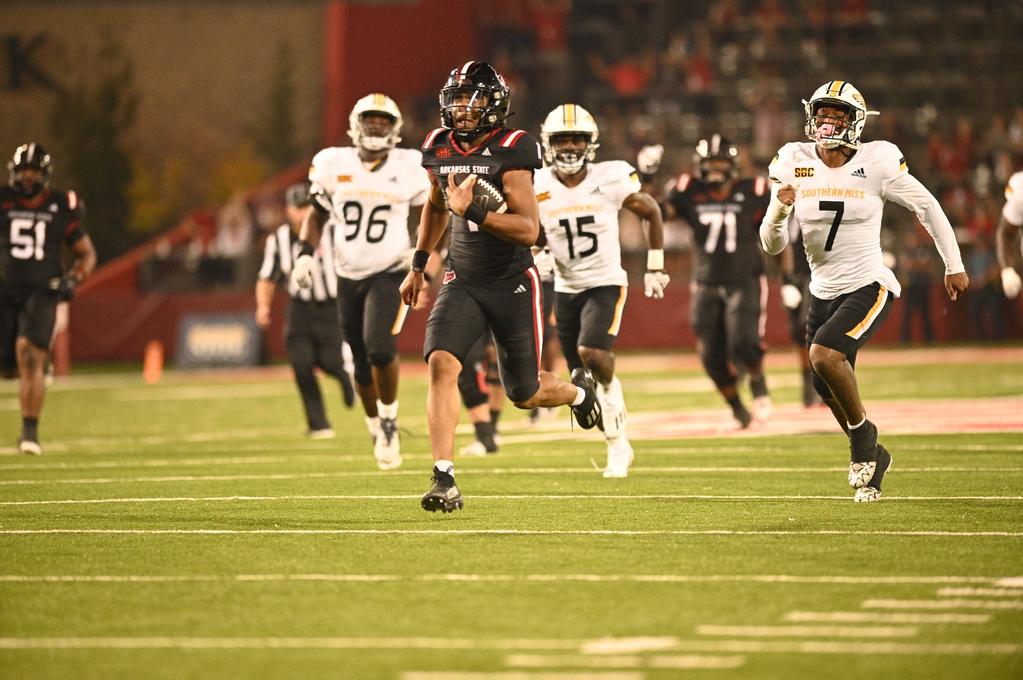
For the first time in the Jones Era, the team had repelled the barbarians at the gate. “We have to learn how to win,” was a statement Jones had made often during the past two seasons, and at the time the sentiment sounded like so much chaff. Of course the team needed to “learn how to win.” Why not add “learn how to breathe” or “learn how to write a check” to the list of the obvious? And yet, it wasn’t until the Red Wolves closed out Southern Miss did Arkansas State finally “learn how to win.”
Nobody Understands (or Regrets) the Red Wolves Growth Better than Texas State
As it had the previous thirteen meetings, Arkansas State triumphed over the Warhawks thanks to a refreshingly dominating fourth quarter led by Zak Wallace and (as usual) Corey Rucker. As nice as the victory was, nobody was particularly impressed. ULM hadn’t won a game over Arkansas State since 2009. Why start now?
Beating the Warhawk’s bitterest rival, Louisiana, was another story. The Cajuns had bested Arkansas State three times in a row and it didn’t seem likely that a young Red Wolves defense was going to stop Louisiana’s highly ranked run attack. The Red Wolves alleviated our doubts by out-rushing the Cajuns 232-64 in a crisp, businesslike 37-17 victory.
However, no team endured the slings and arrows of the Red Wolves resurgence quite like Texas State. Identical to the Cajuns, the Bobcats had triumphed over Arkansas State three straight meetings and had no reason to believe a fourth wasn’t an option. Bearing a potent offensive attack led by quarterback TJ Finley and running back Ismail Mahdi, it was a commonly held belief that the Red Wolves would not have enough defensive edge to prevent the Bobcats from rolling once again.
Arkansas State won 77-31 thanks to a pair of pick sixes from the defense and seven rushing touchdowns from Red Wolves running backs. It was a masterful work of dominance from the Red Wolves, and that it came at the expense of Texas State was especially delicious considering that Arkansas State’s fall from grace seemed to coincide with the Bobcats’ rise.

Furthermore, the win seemed to validate the worthiness of Jones’ approach to roster building. GJ Kinne, newly arrived from Incarnate Word, had bolstered the Bobcats’ roster with 37 transfer students, including starters Finley (Auburn), wide receiver Joey Hobert (Utah Tech), offensive lineman Brey Walker (Oklahoma) and defensive back Shawn Holton (Incarnate Word). Kinne brought nine transfers from Incarnate Word alone. Kinne’s predecessor, Jake Spavital, had signed a total of 10 prep school athletes in his entire tenure. Texas State was essentially a team curated from the entire college football community.
But Arkansas State was grown from seed – largely raised by wolves. Texas State took advantage of A-State’s growing pains by winning their first two meetings with Jones at the helm. But the 77-31 drumming of the Bobcats served as a message – a culture of winning begins with high school visits.
The Losses Told a Story, Too
While the wins over Louisiana and Texas State were satisfying, it was the losses to Troy, Coastal Carolina and South Alabama that revealed just how much growth is left for Arkansas State. The Red Wolves won the games they were supposed to win (UMASS, Stony Brook and ULM), came up tops against peer-skilled foes (Southern Miss, Louisiana and Texas State) but fell short against programs that had a more advanced culture of winning. (Let’s just forget about Marshall.)
The conference losses weren’t particularly bad. The Red Wolves seemed the better team against the Chanticleers, and the South Alabama defense was among the very best squads A-State had seen all season (and lost by just seven points). The crushing loss to SBC Champion Troy was educational to say the least: a 37-3 effort that mimicked the loss to Memphis in more ways than just the score.

Teams with elite defenses found success against the Red Wolves: Troy (17th), South Alabama (18th), Northern Illinois (22nd), Marshall (61st) and Coastal Carolina (65th) solved the A-State offense fairly easily. Oklahoma (77th) and Memphis (110th!) were anomalies. If the Red Wolves are to take their growth to the next level in 2024, they will need to improve their total offense (72nd), particularly the third down success percentage (101st).
Polishing the Crystal Balls
This December signing day saw the Red Wolves once again land the Sun Belt’s best recruiting class, with 21 commits, all but one recruit rated a three star talent. Butch Jones and his staff continue to flex their muscles as ace recruiters.
Meanwhile, Arkansas State’s immediate future lies with young stars already shining. Quarterback Jaylen Raynor will be a year stronger and wiser. The team, which started the most true freshmen in the entirety of Group of Five football, will only deepen their abilities as playmakers. We’ll expect bigger contributions from Sam Graham, Denard Flowers, Brandon Greil, Tennel Bryant, Clyde Curry and a host of promising young talents.

They’ll need to grow up fast. Samy Johnson is gone. Jeff Foreman is gone. Eddie Smith is gone. But those who return will be positioned for incredible seasons. Corey Rucker and Courtney Jackson will enter the season as top tier wide receivers. The running back squad of Ja’Quez Cross, Cedrick Hawkins and Zak Wallace may be the best in the Sun Belt West. The offensive line? More experienced than ever with Jacob Bayer anchoring the middle. Defensively, we get another season of Charles Willekes and Nate Martay. We get a wiser Trevian Thomas and Justin Parks. The balance of youth and experience should be perfect.
What will we demand of these Red Wolves? Six wins? Ten? A championship? At the very least, they will likely compete for a SBC West title. The Transfer Portal (which at the time of this writing has been merciful) may ultimately provide a few unsettling question marks, but as it stands, the Red Wolves are as stable as any team in the Sun Belt – perhaps more so.
2024 looks to be the Return of the Red Wolves, if the college football infrastructure doesn’t implode between now and next September.
++
 Howlraiser