
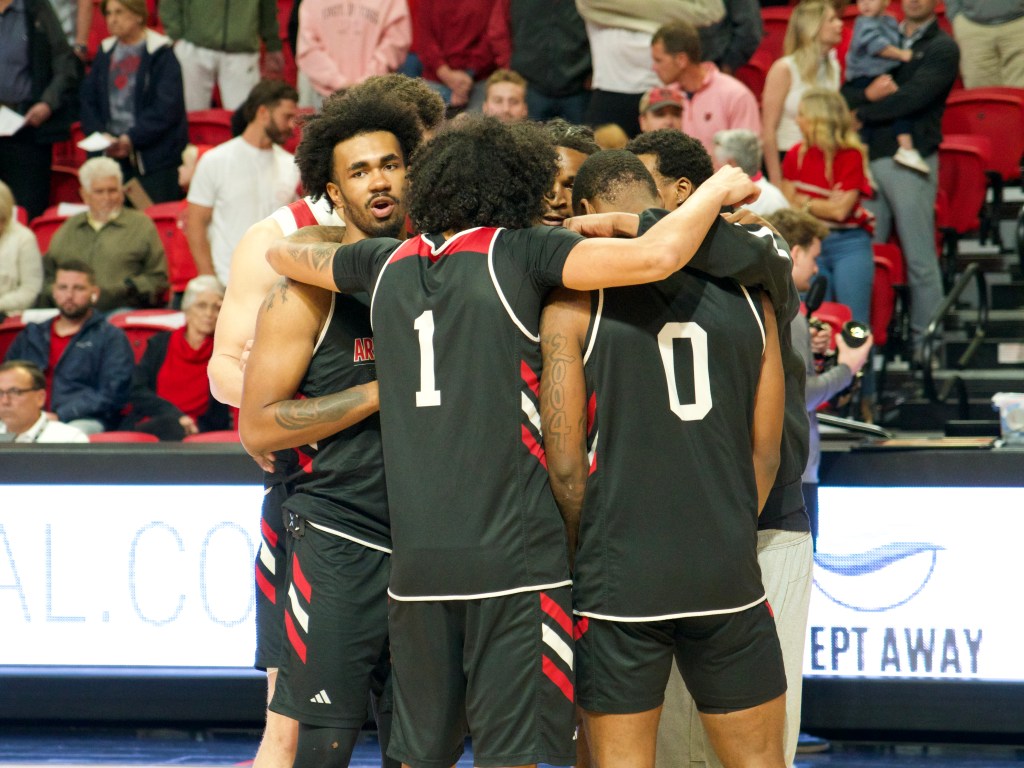
In 2017, the Sun Belt and MAC launched the MAC-Sun Belt Challenge, an annual cross-conference HvA arrangement ment to benefit both conference. “The MAC-SBC Challenge is unique because it annually provides our men’s and women’s basketball teams with two quality games against peer institutions,” declared SBC Commissioner Keith Gill. There was much rejoicing.
Both the MAC and SBC were in desperate need of quality games. The NCAA had replaced RPI as its ranking standard with NET, which assesses a team’s strength by combining game results, strength of schedule, efficiency (points per possession), and location, using a quadrant system (Q1-Q4) where Q1 wins/losses are most valuable for March Madness seeding. A MAC-Sun Belt Challenge wasn’t likely to provide anyone with a Q1 victory, but there were some Q3 and Q4 wins to be gained.
For its part, the Sun Belt was looking to push its basketball aspirations out of the mud. The conference hadn’t sent more than one program to the NCAA Tournament since 2013, when Western Kentucky and Middle Tennessee represented. (Neither reside in the Sun Belt today.) With college football continuing to push mid-market teams from relevance, college basketball still had an appetite for Cinderella. If the Sun Belt wanted national recognition, the hardwood was the stage from which to shine.
The problem is that everyone is looking to game the NET, which was originally intended to reward programs who ventured out of their home arenas and challenged teams to true road games. However, many blue-blooded programs simply refused to cede their home court advantage. For example, of Arkansas’ 13 OOC games preceding its conference opener with Tennessee, 12 were played in Fayetteville. By contrast, nine of Arkansas State’s first 13 OOC games were played on the road.
Furthermore, NET not only rewarded teams that played heavy opponents on the road, it exacts a penalty on teams who lose at home to lower-quad opponents. Blue-blood programs don’t see value in inviting a program like Old Dominion if there is an even remote chance the Monarchs could win. (Credit the bravery of Villanova for inviting ODU for a game.)
Rather than play true road games, many programs began creating multi-team events, or MTEs, which are often played at neutral sites where losses didn’t invite so great a penalty. These events proved to be fine TV viewing, but also seemed to sidestep NET intent.
With premium programs unwilling to schedule quality (and pesky) mid majors at home and equally as unwilling to meet them on their home courts, programs like Arkansas State simply have a difficult time creating a schedule with enough gunpowder to dent NET.
So What Use is the MAC-Sun Belt Challenge?
The MAC-Sun Belt Challenge was supposed to provide solid NET games between the conferences’ best performing programs. Most years, the result is more or less the two conferences playing mirror images. This year, the MAC may actually provide the intended boost to SBC fortunes.
For example, the top three NET teams today for the Sun Belt are Troy (126), Arkansas State (129) and Marshall (140). The MAC’s top three are Miami (44), Akron (54) and Bowling Green (106). Arkansas State welcomes Bowling Green on February 7. A win over the Falcons would be more NET-worthy than any SBC victory.
Still, the Challenge has its internal detractors, especially the Challenge’s Round 2. Last year, A-State head coach Bryan Hodgson wasn’t very keen on traveling to Kent State during mid-conference play. The Red Wolves were in the midst of a conference title run, and the game wouldn’t do much (if anything) to affect NET enough to matter. Why risk injury and invite fatigue for an OOC game that no longer has the power to matter?
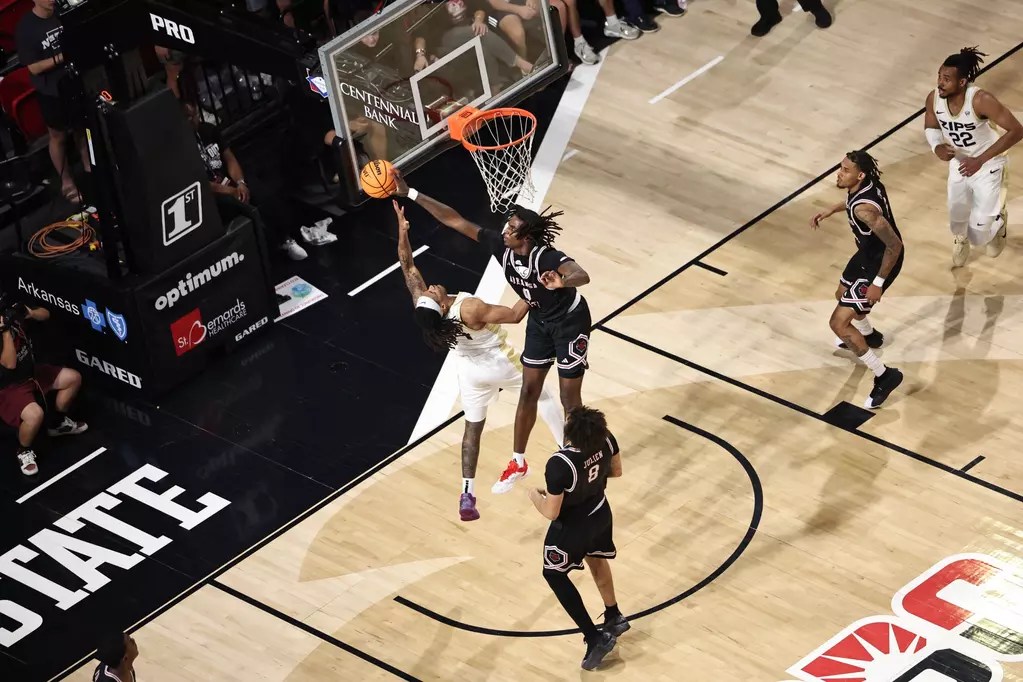
This year’s Round 2 will be played on SBC courts, so any dismay will likely originate near the tundra. After all, how does it benefit Miami (a borderline Quad 1 opponent) to play Marshall at Huntington? “Cross conference rivalry” is a charming notion, but frankly, the Sun Belt has a mild but respectful curiosity with the MAC at best. If you want to see a Challenge with heat, arrange a meeting with CUSA, the Athletic or even the Atlantic Ten. Give us regional tension.
There are no obvious, simple-to-execute answers for Commissioner Gill and the Sun Belt. He’d like Sun Belt programs to schedule higher quality opponents, but those opponents would rather take in the Maui sun for an MTE than see a half-filled arena for Western Kentucky or Appalachian State. It doesn’t help in the slightest that current transfer and NIL rules radically deplete Sun Belt programs, making each program difficult to evaluate. Sun Belt basketball is in a bizarre quantum state the exists on the periphery of reality, unable to muster enough density to generate impact.
Eventually, Sun Belt programs will have to take it upon themselves to make deeper runs in the NCAA Tournament, as daunting a task that may be. I once saw a Hobbit travel all the way to Mordor to toss a gold ring into volcano, so I know such deeds are possible.
The second round of the MCA-Sun Belt Challenge is February 7th.
MAIN PHOTO IS MINE.
 Howlraiser